The King-Morgridge Scholars Program supports students who demonstrate exceptional leadership, a commitment to social impact, and a strong connection to their home communities. Scholars are provided resources, mentorship, and funding to pursue initiatives that create meaningful change locally and globally.
Across individual interviews, each scholar reflects on their leadership experiences, the challenges and opportunities within their home communities, and the impact of the work they are leading. While their contexts differ, their stories highlight how young leaders are driving meaningful change—from Ecuador to Ghana to Venezuela and Chile.
Michael Bebile-Kogh: Cohort IX Scholar from Kpalsi, Ghana; founder of ASELEM, an initiative advancing sustainability, agriculture, and youth engagement in environmental action.
What inspired you to start your organization and what is its purpose?

It was tough to see farmers put so much effort into tilling the land and getting so little out of it. My parents are farmers, so I spent some time on the farms too and couldn’t bear to see such happening. ASELEM was founded in 2021 as a direct response to the struggles of my family and other farmers, as well as to the urgent challenges of our time, including climate change, global warming, and food insecurity. The ASELEM acronym, which stands for Advancing Sustainability Education, Life, Environment, and Mankind, was derived from the names of our first members.
How do you manage the challenges of leading an organization remotely while studying in the U.S.?
It’s tough to implement any physical projects at this time, since I’d usually be on the ground for most of the logistics. We’re currently awaiting legal registration of the organization in Ghana, so we won’t rush into implementing any projects at this time. We are, however, actively sensitizing people everywhere on our social media platforms on the need for sustainability and their part in it.
Can you share a moment or achievement from your organization that you are particularly proud of?
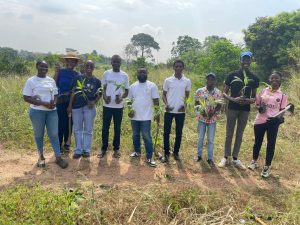
It excites me to assemble young people for a great cause. The future belongs to us, young people, hence it is in our own interest to work for its good. Whenever I can assemble young people for an event, I am fulfilled.
What impact has your organization made so far in your home country?
The trees we have planted will beautify the environment, act as windbreaks as they grow, and could help create biodiversity in the areas where they are planted. We have inspired many young people and organizations, and we are doing many great things. We cannot do it all alone, so we’re pleased to sow the seeds of action in the hearts of many, even if we can only do so little presently. We support organizations that share our goals of serving humanity and the environment and bring them closer to the youth.
What are your goals for your organization over the next few years?
Hopefully, ASELEM will go beyond a foundation focused on environmental sustainability and agriculture. I believe everyone can contribute to this cause, no matter their skills or passions, so ASELEM will have other subgroups to tackle ecological and human concerns.
Interested in reading about the other two scholars? Check out (or check back for) their features:
Kristhel Maholy Vernaza Sánchez: Cohort VII Scholar from Guayaquil, Ecuador; co-founder of RODDNA, a youth-led network advocating for the rights of children and adolescents.
Angeline Morgado: Cohort VIII Scholar from Guatire, Venezuela and Santiago, Chile; founder of Incidentes, a youth-driven network focused on advocacy, public policy, and educational access.