The King-Morgridge Scholars Program supports students who demonstrate exceptional leadership, a commitment to social impact, and a strong connection to their home communities. Scholars are provided resources, mentorship, and funding to pursue initiatives that create meaningful change locally and globally.
Across individual interviews, each scholar reflects on their leadership experiences, the challenges and opportunities within their home communities, and the impact of the work they are leading. While their contexts differ, their stories highlight how young leaders are driving meaningful change—from Ecuador to Ghana to Venezuela and Chile.
Kristhel Maholy Vernaza Sánchez: Cohort VII Scholar from Guayaquil, Ecuador; co-founder of RODDNA, a youth-led network advocating for the rights of children and adolescents.
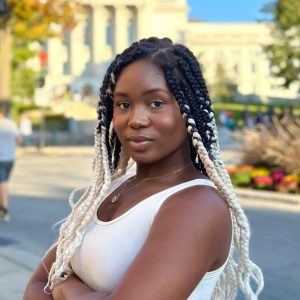 What inspired you to start your organization and what is its purpose?
During the COVID-19 pandemic, when the Ecuadorian government was primarily focused on the health crisis, children and adolescents from across the country came together in an online webinar to shed light on the many challenges and rights violations we had faced.
That inspired me and two others to create RODDNA (Network of Organizations for the Defense of the Rights of Children and Adolescents), a youth-led space to learn about their rights, amplify their voices, and influence authorities on all levels to ensure their well-being and comprehensive development.
How do you manage the challenges of leading an organization remotely while studying in the U.S.?
Staying involved in my organization while pursuing my academics has been one of my greatest challenges—and concerns—since moving abroad. From the beginning, RODDNA’s vision has been to build a horizontal leadership structure where everyone is important, but no one is indispensable for our collective work to be effective.
To contribute effectively, I focus on fewer projects or tasks. I prioritize delegating responsibilities and transferring leadership, trusting in the abilities and commitment of my team. I also make sure to set aside at least one or two hours each week in my calendar to handle matters related to the organization.
Can you share a moment or achievement from your organization that you are particularly proud of?
Our voices have been heard twice at the United Nations headquarters! While I had the great honor of representing RODDNA on both occasions, each moment reflected the collective effort of my colleagues, advisors, and allies, who worked tirelessly for months to amplify the voices and demands of millions of children and adolescents in Ecuador.
In 2022, during the pre-sessions of the Universal Periodic Review (UPR), we addressed issues such as chronic child malnutrition and the challenges surrounding child and adolescent laws in Ecuador. We presented these concerns to United Nations diplomatic missions to encourage them to make specific recommendations on those issues to the Ecuadorian state.
The second opportunity was in early 2025, during the Examination of the Ecuadorian State by the Committee on the Rights of the Child (CRC), where a delegation of Ecuadorian civil society representatives held key advocacy meetings with members of the Committee. My participation was made possible through the financial support of the King-Morgridge Scholars Program.
What advice would you give to students who want to lead change in their home countries while studying abroad?
I want to acknowledge how common it is to feel that, while we’re away from our countries, we’re no longer contributing enough. But something I have come to understand is that investing time and resources in our education is one of the greatest contributions we can make to our countries and the causes we care about.
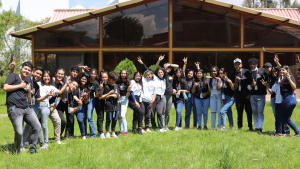 While our experiences at home teach us about the roots of social problems, studying abroad allows us to view them from new perspectives, acquire tools to design innovative solutions, and build social networks that can help us realize our projects. Don’t let guilt or self-doubt overshadow the incredible accomplishment of pursuing education abroad—you are already part of the change your country needs!
I highly encourage you to take full advantage of the resources available in educational institutions abroad, especially funding for projects or research. From my experience, funding is often one of the biggest obstacles to implementing new initiatives. Studying at a university abroad can open doors to financial support that might otherwise take months or years to secure. Seek out those opportunities, apply, and implement your ideas!
What are your goals for your organization over the next few years?
Securing sufficient funding to implement this ambitious project is our first objective. Since RODDNA was founded virtually during the pandemic, one of our main goals is to build permanent territorial hubs where adolescents without access to digital resources can participate in person.
Interested in reading about the other two scholars? Check back for their features:
Michael Bebile-Kogh: Cohort IX Scholar from Kpalsi, Ghana; founder of ASELEM, an initiative advancing sustainability, agriculture, and youth engagement in environmental action.
Angeline Morgado: Cohort VIII Scholar from Guatire, Venezuela and Santiago, Chile; founder of Incidentes, a youth-driven network focused on advocacy, public policy, and educational access.